Friday, April 5, 2024

Squad Shopping


An intriguing phrase has been popping up on retail feeds. “Squad Shopping”. It would be easy  to imagine a pack of women roaming a shopping centre, however Squad Shopping refers to online shopping with your friends. It’s a shopping party, sharing your cart with facetime.  Imagine everyone watching their phone/ computer as friends look thru various websites and discuss products they are thinking of purchasing. Everyone is watching the same screen images and able to talk to each other. It’s a relatively new concept. The biggest uptake demographic is Gen Z females, with China heavily embracing this technology due to their strong culture of peer purchasing pressure. This demographic have grown up more comfortable with visual phone calls than audio.


In 2020 ex L’Oreal brand manager Elysa Kahn and her father invented a program called Squadded. Chrome partnered with Squadded and so the fun began. Squad shopping could be seen as riding the wave of group participation digital activities. You can remotely join with your friends for a streamed movie night or if music is your thing Spotify have group listening control Jam. Online gaming apps have options to bet with your mates. Squadded promotes applications such as Bridal party shopping or long distance shopping from your holiday location.


It would be easy to dismiss this shopping behavior if you don’t fall into this specific demographic. As a concept and existing product it has potential to evolve into a lot more. In time poor society it provides an avenue to consult with your most trusted panel of “influencers”- the ones you know best- your friends. The opinion of your besties holds much more weight than influencers you don’t personally know. Currently there are options to text or facetime your friends. But this speeds up the process by allowing you to move quickly between other sites and consider more products. Not all brands or products will be compatible with this platform but it will be interesting to watch the entity morph.


Thursday, February 15, 2024

Home Renovation and working with what you have.


Work it Baby! It’s human nature to notice the physical beauty of others and sometimes wish we had the same attributes; this also applies with houses when you are undertaking a renovation. You must learn to love the bones and limitations and work with what you’ve got.

Often when I begin a domestic renovation design job, I find myself looking through Houzz or Pinterest mood boards that my client has made. It’s a great way for me to learn about their ideas for what they want and their tastes. I can usually start to pick patterns in what they have saved.

It is quite easy to admire a particular style and want to copy it, but the style you love may not translate to type of house that you have. Behind most successful and emotive interiors photos are unique characteristics of that property that have been enhanced. It is possible that the story you are reading about in a home magazine started out with a brief in a different direction but was carefully steered and moulded to make the best of what they had to work with.

At the early stages of a job it’s important to be realistic and assess whether it’s possible to achieve the desired outcome based on the existing house that you are starting with. For example I can’t turn a Queenslander cottage into a New York loft. Nor can I achieve the same window effects in a house with 2.4m ceilings and plaster board walls if the example image is a vintage French chateau with 4m ceilings and full height billowing curtains. Sometimes acknowledging those limitations can be a disappointing realisation for clients. That said, it is possible to pull off amazing transformations with good interior design. There are many industry tricks that can conceal offending features.


Seeing something you love is the easy part but being able to recognize what elements have made that initial image successful can be more difficult. This is where an experienced designer can help. They can offer the client guidance and options which put a positive spin on what they can achieve with what they’ve got and where possible rework some of the original elements to suit the space.

Approach your renovation with an open mind and know the importance of flexibility during the concept stage. Designers love excited and inspired clients and your finished look may become another person’s inspiration.

Thursday, February 8, 2024

Meters Matter


What makes a successful strip shopping precinct? This question came up recently during discussions I was having with my local retailers association. Strip shops are those on a street, as opposed to being in a big shopping centre. The British refer to it as High Street.

There are many factors that make strip shop precincts successful such as good anchor tenants, interesting mix of retailers, demographics. Transition also plays a major role and meters matter in the world of retail. If you think of a strip precinct like a body, the strongest populated street is the spine, the attached streets would be the ribs. However if there are gaps from the spine the body loses its strength. Successfully transitioning customers means that the flow must be imperceptible. 

I’ve seen this formula in action in my own suburb. I live in an older suburb. Times have changed and competition increased. In my childhood you could get everything you wanted without leaving the suburb. The shops all opened for late night trading on a Thursday and Saturday mornings were super busy. Today, some retailers are stalwarts from my childhood, others new kids on the block with very innovative ideas. There’s also the usual turn-over and empty tenancies which are mirrored in all suburban areas like this.

Map of my local area showing wide spread of shops.

One of the negative issues impacting my local shopping precinct is the spread over multiple streets. Transition can be difficult to successfully achieve within retail. It's difficult even within a store, especially if it's a multi level store. A few years ago Woolworths supermarket built a brand new building in my local area and relocated the library to above Woolworths. This previously empty non-destination zone created a whole new traffic flow within the area, which affected other traders.

Byron Bay is similar to my local area, in that it's also spread out and has good and bad pockets as a result. However it has large tourist influxes which boost the numbers.  

Map shows single street transition.

A suburb near to me shows the difference that strip shop layout makes if the majority of stores are on the one street. This street (shown above) has a movie cinema as it’s long term anchor tenant. There is also a popular pub that would be considered an anchor as well as some very reputable one off retailers. Here people can browse at the shops when they go to the movies. They have multiple choices for food all along the one street. Half way along the street a large park with sporting fields and a playground breaks the flow. This is where the transition starts. Across the road from the park is the local supermarket, which always does well, but is a destination in itself and doesn’t attract the same kind of foot traffic. After the park the customer flow changes. The end retailers are visited by car and don’t have the same exposure as near the cinema. This is why “meters matter” in retail.

Another strong retail strip street is Hastings St in Noosa. It’s a very easy street to walk a lap around the shops.

Map of Hastings St, Noosa.

There’s no sure answer to creating a successful precinct, however as a potential retailer, looking at the layout of the area can help with a more informed decision for future growth.


Tuesday, October 17, 2023

The Lipstick Effect


You can’t get it, but you may already unknowingly be part of it.

The Lipstick Effect

You’ve probably heard it mentioned but wondered exactly what it is. It’s being used more frequently at the moment, especially when the household spending is discussed.

It’s a subtle, but unofficial economic indicator. While the term was only coined in the past few decades, it can be traced back to the depression in the 1930’s. The Lipstick effect is the purchase of a luxury beauty item that gives a feel good effect to a woman. It refers only to cosmetics, not clothing or any other discretionary item. The psychology behind this is the in tight economic times women want a product that quickly and easily makes them attractive to a potential mate with good earning capacity. Whilst in this day and age that may seem very antiquated and most modern women would strongly argue this, we are still seeing it in action.

It was reported that Estee Lauder saw significant increases in lipstick sales after the 9/11 stock market crash and also the 2008 crash. The one significant variant to the Lipstick Effect was during Covid and the economic roller coaster of those couple of years. Women swayed from purchasing lipstick that would be concealed by a mask and instead perfume purchases increased.

The Lipstick Effect relies on regular sales figures from major cosmetics brands- which are not always forthcoming. It’s also a bit ambiguous because some women may be sticking to their regular cosmetics brands, whist others are still purchasing lipstick but have downgraded to cheaper brands.


Wednesday, June 7, 2023

The Demise of the Department Store


Around the world department stores are struggling. Many reasons are used to explain this phenomenon; rising rent, internet shopping, growing sized shopping malls, too many shopping malls, bad store layouts, lack of consumer experience, too much discounting, spending slow down, product and stock not relevant to customer base.

In recent years Corona virus and the increase of online shopping are claimed to be behind the downturn, however if you look back through media, department store decline was being discussed back in 2000 and earlier.

The decline of department stores comes down to the simple fact that they are no longer seen as “destination” stores. They have lost this destination status because they no longer offer exclusive products to customers.


The brands that were sold exclusively in department stores realized that they could afford to open stores under their own name and sell direct instead of limiting themselves to sales from one head retailer. It became possible for them to reach their customer base through another avenue. Why shop in a department store when you can walk a matter of meters and find the same stock in the own brand shop?  Online shopping opened yet another sales opportunity to sell direct.


The chase for the mighty dollar has gone even further with some wholesale companies now selling direct to the public, at pre-set retail prices. Customers are also more savvy now a days and with simple googling will often find the wholesaler or agent for a brand and approach them directly to purchase- with the intention of saving some money.

Previously department stores were a launch pad from new brands wanting to capitalize on the guaranteed traffic into the stores. In turn department stores dictated terms such as high rent for a concessionary store and long payment periods for stock. Issues such as these became motivating factors for brands to look at other ways to sell their products.


Australia has the distinction of being the birth place to the worlds oldest continuously running department store- David Jones. The first DJ’s opened in Sydney in 1838. Myer on the other hand opened in the exploding gold fuelled city of Bendigo in 1900. Back then both stores were able to offer things that no-one else could. David Jones was the first store in Australia to sell Coka Cola. In 1928 their Elizabeth St Sydney store had a restaurant that served 5000 customers a day, including the queen during a royal tour. The department stores of yester year were fed by rapidly growing populations and wealth and in a sense they could be everything to everyone.


The decline of department stores is like watching a train wreck in slow motion. Think tanks and retail consultants have brain stormed many ways to revive the stores, but none have proved to be the magic bullet. Some ideas have been to target towards a younger market, which lost them the “older” market who still think young and want to look young and very often have more money to do so. This idea was not a hit. Another solution is to pivot and adapt the stores. This is a broad brush. In the past it has worked. During WW2 the David Jones store on George St Sydney adapted 3 floors to become free accommodation for service women.


Where to from here? There’s no going back and no changing what’s happened. The golden days are over and department store locations are decreasing. This could also be viewed as a much needed market re-adjustment. Now it’s time for the shopping centre rental agents and the centre designers to work out how to move forward. Department stores have huge floor areas and often deep tenancies. That means reworking the centre layout to divide into smaller tenancies or thinking about different types of large footprint tenants- mega churches, small residential apartments, indoor farming or car dealerships as some ideas. But it may also mean time for department stores to pivot their model. Well known multinationals have done it previously. Nintendo was originally Japan’s largest seller of greeting cards. Perhaps future generations will know the name Myer or David Jones as a large hotel chain or indoor amusement parks.


Monday, March 20, 2023

Silicosis


This subject has been in the news a lot lately. It’s an issue which greatly affects my industry from the initial product specification stage to the end manufacturing- which is where the disease is occurring.

It relates to the silica content in the dust of quartz, sand, stone, soil, granite, brick, cement, grout, mortar and bitumen. But it’s the engineered stone benchtops that have been causing the most problems. I don’t see the demand for stone benchtops declining at any stage in the future.

However the past couple of years has seen the trend swing back to the natural stone for benchtops as opposed to the engineered stone. The reason for the resurgence of natural is riding on the 70’s design trend going through, which heavily features stone but also celebrates the uniqueness of each stone slab.

Engineered stone was invented for numerous reasons. It enabled a consistent finish to be guaranteed. If you wanted a particular colour or pattern heaviness in the stone slab you could specify it and know you would get that. If you are using real stone slabs you need to go to the actual stone mason and reserve your specific slab if you wish to ensure you get that exact pattern appearance.  The natural stone could not guarantee exact colours and patterning. The natural was also limited by the amount found in nature. Some stones are very expensive because they are rare and found in one off locations in the world.


Manufactured stone enabled the creation of a similar look to the real but could be provided as an endless supply.

The manufactured stone is a much stronger product than some types of natural stone, which may have cracks and fissures resulting in higher breakage and therefore replacement costs.

Silica does occur in natural stone, however it’s usually around 30% silica. The manufactured stone is has approx. 80%  or higher silica due to the formula.

How does the building industry keep up with the demand for a product while eliminating the dangers of manufacturing the product?

For a while now the major engineered stone companies have been creating new products with a lower silica content. Smartstone have a range with the stone image printed onto the top surface and allowing them to decrease the silica in the substrate. Caesarstone  are also working on new products which will have at least 40% or lower silica content. That is the percentage they are expecting the governments to regulate.

The other initiative which has been implemented for a while is safer handling procedures to manufacture with this product. I must say that any stone masons I’ve worked with over the years have been very professional and run wet cutting procedures. This is a proper way to cut as it eliminates the deadly dust. However there have been some manufactures who have not wanted the expense of setting up a wet factory and cut dry.


I’m keen to see how this all develops as I know we can’t simply outlaw stone benchtops.


Tuesday, February 28, 2023

Sterile House Design


I was reading the real estate lift out this weekend. For a while now we’ve been seeing the 70’s/ Palm Springs architectural trend. It’s usually white, lots of arches in doorways, perhaps some curved walls and gardens that could in some cases be described as stark. The other feature that strikes me is that they look like sterile impersonal show houses, not homes.

I understand that when you are selling a house the real estate agents advise to declutter of personal items. That makes sense- potential buyers need to envisage their future lives in the house, not see your life.


However it’s not just the real estate pages showing the impersonal interiors, it’s also reflected in feature articles where people are showcasing their homes in glossy magazines and online stories.

I always feel that these houses tell nothing about their owners’ personality. Sure the home owners would have briefed the architect about the look they wanted. But when the house has only trendy design features and neutral décor, it sadly comes up lacking the lived in/ loved feeling. And more to the point, it’s really difficult to live a minimalist show house lifestyle. There’s shoes that get discarded around the house, pet food bowls, magazines, bills, books, family photos & mementos, homework, coffee cups, devices and chords etc. 

My thoughts were echoed to me when reading a recent article on Oprah Daily. Oprah describes finally accepting that she needed a house that showed her true personality, instead of trying to conform to trends and how she thought people wanted her house to look.


As a designer or architect it’s not unusual for a client brief to request “a hotel feel”. However as a designer if I want a Hotel Feel- that’s exactly where I go. I’m more than happy spending time in a nice hotel or boutique accommodation that is beautiful and elegant yet neutral.

What I most enjoy when entering a house for the first time is seeing the personality of the owners. It can still be a stunning modern interior, but the details such as family photos, framed children’s artwork, well tended hanging plants with tendrils trailed around shelves, book collections, the odd lamp that stands out because it’s a family heirloom or the dog bed in a spot where he can watch his family come and go. They are the things I like to see, not the inter-changeable cookie cutter houses.


Trends are great and they influence everything in life from our cars, to fashion and how we live, until they don’t and we’ve been oversaturated and then suddenly realize that just because it’s trendy, it doesn’t represent the true you. It’s easy to throw out the acid wash jeans and trade your car to upgrade to a new model, but houses are a lot more expensive to update.


Wednesday, February 8, 2023

My 5 tips for Retailers


Ask anyone who has worked in the retail arena for their top tips and you’ll get different answers every time. The responses are largely influenced by the area of specialty that person has.

For almost 30 years I’ve lived in the realm of the retail world. I love watching all the mechanisms that meld together to make this industry function. I’ve designed shops and retail outlets for all types of clients- hair and beauty, foodies, clothing, jewellery, health and medical, real estate, furniture, produce, garden and lifestyle.

Here are my Top 5 Tips for Retailers.


1.      Know your Market. I always ask new clients who their market is. If I’m designing their store I have to make the look appeal to that market, but also be conscious not to isolate any potential customers on the fringe who may be enticed in. Knowing the market is also important for service. One example that comes to mind is a brand of upmarket clothing that appeals to the pre-teen market who aren’t quite old enough to work and therefore rely on the bank of mum and dad. However the sales people are known for being super rude and dismissive to the parents.


2.      Have Omni channels. We’ve definitely seen the importance of this during covid, but even before then businesses knew the value. Multiple platforms and ways to allow customers to buy are so important. They may be browsing your socials or website at 11pm but wanting to come into your store the next day at 9am so they can touch and feel the product and then purchase. Or they may simply purchase online, as many had to during covid.  Do not limit the methods for them to purchase from you.


3.      Educate your customers. If done well this will generate add on sales. This is done by sales staff and visual merchandising and promotional/ advertising online. It’s the sales person who offers up accessories or a top that goes with the bottom piece the person is trying on. Or it’s the window display that shows the a whole outfit all working beautiful together or the online images showing a range of home décor that compliments the furniture in a room. People often need to be shown or advised about how to make something work or how versatile it can be. Many people are nervous about “getting it right” if left entirely to their own decisions.


4.      Walk the walk, Talk the Talk. I know a gorgeous older woman who owns a suburban clothing boutique. When I see her at the local supermarket she always looks stunning in an outfit from her shop. Her hair and makeup are beautiful. Her social media promotes her stock and shows her customers out and about wearing clothing from her store. She attends fashion events and also promotes these on her socials. She personifies what she sells. If you are building a brand it needs to encapsulate everything you value for your brand. There is nothing more disappointing than the plumber with the leaky taps.


5.      Acknowledge your strengths that set you apart from your competitors. There will always be competition in life regardless of what you do or which industry you’re in. Instead of getting caught up in what your “competition” is doing, think about what you can do to be unique and add that edge of difference. Perhaps you have an interest in a charity that ties into your area of retail- promote it. Offer customer incentives- spend $1000 on clothing and get a free styling session. A well known tile shop is currently promoting the fact that you can get complimentary tea or coffee while you are in the showroom browsing.


My tips are not about having a well designed store. That’s important, but is only one cog in the wheel. A great looking store will only get a retailer so far if the other elements are not working. Over the years I’ve designed stores knowing from the start that they won’t work because the other factors are not in place and not considered important. However it’s an absolute delight to watch a retailer who nails it in every aspect and their brand grows with success.


Sunday, May 22, 2022

Selling property with a Development or Building Approval


Real estate advertising sometimes notifies potential buyers that the house or land has already had the council applications approved, meaning that the new owner can straight away start the building works on that property.

Depending upon the type of building work it may only be necessary to lodge a BA- Building Approval or if it’s a larger project you may have to initially apply for a DA- Development Application.


Some examples that require a DA are if you are applying to do something major, such as have a property rezoned into a different building class, or encroach on a boundary, do building work to a dwelling with a building control on it or you are planning a major development. The DA usually takes longer to prepare and have assessed and usually costs more. Most times a town planner is needed to prepare this assessment.


If you need a DA, you can only submit your BA after that has been approved. The BA is a lodgment consisting largely of the building plans that you’ve had drawn up by the architect or drafts person. These are assessed to ensure they meet the relevant building codes.


The nature of a DA means that you are seeking an approval for something larger than general building works. This approval will usually take a while from the beginning and through the assessment stage. Plans will be required, town planning reports will need to be prepared and then the lodgment time is on top of that. The approval body may come back and request modifications or may not approve it at all. At that stage you may have to redesign and resubmit. The whole DA process can take from a few months to years. A DA holds a lot of weight due to the nature of its request, costs and the permission granted. Therefore an approved DA is usually quite valuable to the sale of the property.


A BA, when relating to a domestic dwelling are plans that the home owner has had drawn up to create their version of an ideal house. Whilst it might be their ideal vision, that opinion may not be shared by future property purchasers. One man’s castle may not be for another. Therefore an approved BA may not add any value to your sale.


The other thing to keep in mind is that any type of approval has a time limit attached to it. Building works need to begin within a certain time. Depending upon the age of the approval it’s value may have decreased and it may not be a simple case of getting a renewal as legislation may have changed in that time which could render your approval non compliant for a renewal.


If you are considering purchasing property to take advantage of either types of these approvals, do your homework and consult relevant experts in these industries

Thursday, February 24, 2022

Amazon Diversion


Amazon have recently announced that they will be opening their first bricks and mortar clothing store in California. They are already well established in the physical store realm with Amazon 4 star (merchandise, books, devices), Amazon Books, Amazon Fresh (groceries), Amazon Go (convenience & prepared meals.

Their current physical stores are carefully curated with their top selling lines to limit the risk of old stock sitting on the shelves.

However the whole concept of this original online retail behemoth now having a physical presence intrigues me. Several years ago as Amazon online was coming to Australian shores, brands were strongly being encouraged to jump on board because you needed to be on the Amazon platform to survive. They spruiked that your products would have great exposure to a huge buying base. It was marketed so strongly that many brands were too scared not to be listed with Amazon. So they signed up.

Back then the retail game was tough; and it still is. Throw in the global pandemic and everyone is learning to play by new rules. Oh, but how Amazon have learnt thanks to the sales data generated by all the brands and manufacturers who sell with them.

To me it seems the line has definitely blurred. The online giant who did exactly that- “Online”, seems  to have decided “stuff it”, now we’re going to play in the physical world also.

Were brands signing up with Amazon in blind faith and assuming Amazon would always stay in their corner of the ring or were they going in with one eye open? By entering the arena of physical stores, is Amazon now eating the same suppliers who use their online platform?

It will be interesting to watch this play out. So far the Amazon physical stores have not reached Australian shores. They have established in North America which has a much larger market than here.

The new Amazon clothing store is planned to be larger than an average department store. This gives Amazon amazing lease negotiating power when dealing with landlords. They would be seen as an anchor tenant (will attract lots of shoppers to the shopping centre) and most likely be on a very reduced rent rate per square meter as a result.

It’s easy to go on line and find the same clothing item stocked by several different retailers and easy for online retailers to be competitive with prices, but paying rent is a major overhead for physical stores.

This also brings a myriad of issues. How do brands structure their net pricing band to ensure an equitable end price between their items sold at Amazon stores vs a smaller retailer? Will smaller retailers selling the same items become obsolete, beaten in the pricing game by Amazon who will have great negotiating powers with the suppliers? Will suppliers have to come up with product lines exclusive to Amazon stores, so that this double up scenario doesn’t occur?

One of the reasons that department stores have been struggling for many years is that the brands they once exclusively stocked have now opened their own stores. The presence of physical Amazon stores could create similar scenarios by offering the same products within the same shopping centre.

Watch and Wait. The fact that Amazon are testing the water in the massive US market and in very carefully selected areas will take a while for the impacts to be felt.


Thursday, February 10, 2022

The X and Why of Retail


One of the things I’ve always loved about retail design is the X factors that combined give the Why.

I failed maths miserably thru out school. All those numbers just registered as a blur in my brain, and needless to say I could never get my mind around algebra. What was the point of X and Y?

But I now deal in a slightly different version and they have a story and reality to them that becomes a visual reality and can be manipulated in ways to influence shoppers.

I was quite surprised recently. I met a “retail expert” who is frequently interviewed on tv about retail matters. She is brilliant at numbers and statistics, but when she made a comment about a current trend in the retail world I asked her why she thought it was happening and she had no idea. She could not even come up with 1 suggestion. It wasn’t a trick question and I have numerous ideas about why this retail event was occurring.

There’s so many things that happen on a daily basis in the retail world. Some are obvious and others we aren’t aware of.

Why are the supermarkets are so quiet at 3pm? Because the mums are at school pickup.

Why are the hardware stores are so busy on Saturday mornings? Because the weekends are the time for projects at home and everyone needs their supplies.


Why is there a huge demand for cardamom? Because one of the reality cooking shows is featuring Middle Eastern cooking that week.

Smart retailers know their X’s and Why’s and they make sure they all match up. These are the retailers who order up the big stocks of fertilizer in anticipation for Spring and then move it to a prime visibility location when they hear rain is forecast.

I designed a chain of bakeries for many years. They were about to open a brand new store in a brand new shopping centre. They were known for their award winning meat pies. The night before the opening it started to rain. The baker decided to double the set quantity of pies knowing that the next day was due to be cold and wet all day. An hour later there was another call to double that amount again. This was all happening in the wee hours of the morning and the rain was quite set in by then. Sure enough on opening day every pie sold out with customers looking for even more. Knowing their X factors is WHY they had such a successful day.

A recent headline caught my interest. It was about a Vietnamese food chain opening their first American store in Salt Lake City. The first thing that popped to my mind was that Salt Lake City is the home of the Mormon church. I wondered why Vietnamese food would be popular there. So I googled does Salt Lake City have a large Vietnamese population? Turns out it does and it is rapidly growing. And whilst it’s true that Vietnamese food is not limited to particular nationalities, it always helps to have people familiar with their own style of food who  integrate it into the broader community.

Understanding the unique X factors for each business means that you can design stores and tailor retail to influence WHY we buy.


Friday, August 20, 2021

Designing for You or future owners


There have been a few occasions over the years when I’ve been sitting with a residential client discussing the concept and look of their home renovation and they suddenly hit a wall of panic. They realize that all the beautiful pictures they’ve have been merrily saving to their Pinterest or Houzz boards, may not be appropriate for the next owners of their house. They become very concerned about how their decisions will affect the resale of the house, even if they aren’t planning to sell for a long time.

This almost paralyses them like a deer in headlights. They can’t work out what they should do.

If you are renovating to sell in the next couple of years that will put different spin on the design process- which is a topic for another day.

 So here is my advice based on almost 30 years of interior design experience. Forget about future owners and design for you.

There seems to be a general misconception that people don’t like change, that they fearful of new and trendy ideas. Well… they aren’t. Do not underestimate or worry about offending future owners. The fact is that most of us are attracted to new, interesting and unique.

I have never had a client ask for a house design that looks like all the neighbours. We all want a point of difference, that WOW factor when our friends walk in the door and a home that reflects us.

It’s worth remembering that trends have roughly 10yrs of life (this varies, depending exactly what trend it is). This may help as a guide if you have an approx. idea of when/ if you want to put your house on the market. Look at the Hamptons style- still going strong after 20 years.

A good designer will combine all your ideas and your wish list and create a cohesive end result. We will steer you in the right direction and know when to gently apply the brakes to make it all work.

Be bold and confident and take a chance because that’s when it will really start to shine. Live your life, not the one you imagine for people in the future. I always tell clients that you must be able walk in the door everyday and know that you absolutely love your house. 


Monday, August 9, 2021

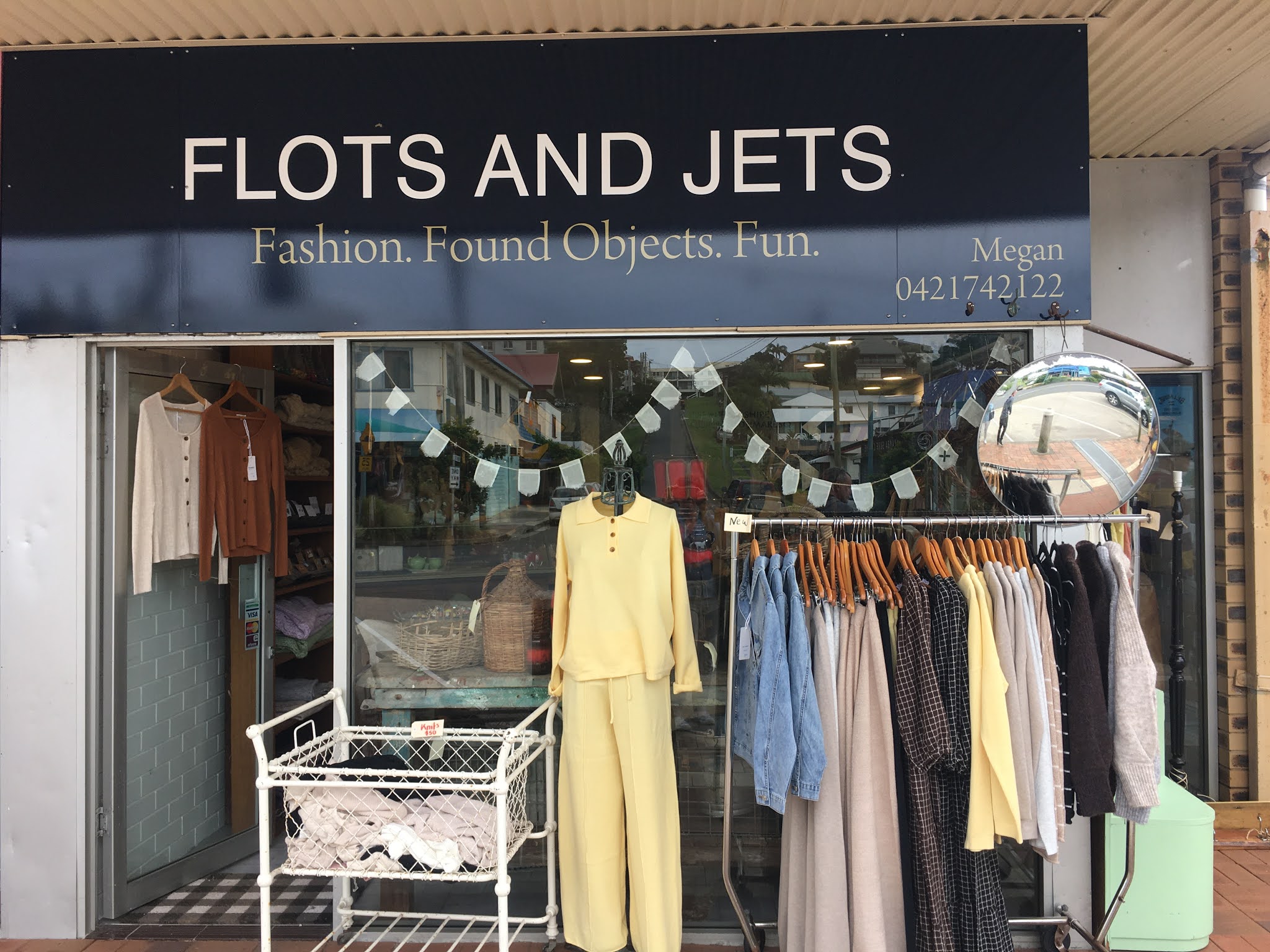
Flots and Jets Yamba


 In a recent break between interstate border closures, I ventured into new territory for me and visited the lovely coastal town of Yamba in the northern rivers area of NSW. After lunch at the very busy historic Pacific Hotel overlooking the ocean, I explored the gorgeous cluster of shops in the main streets. 

I love finding retailers who do it a bit differently while letting their unique style shine. This was the case at Flots and Jets. 


The store sells clothing, jewelry and vintage treasures. The owner has used her eye for the ordinary flotsam and jetsam to create quirky features through out the store. Even old dress making patterns are re-purposed for wrapping purchases.