Monday, February 24, 2020

Retail in Australia


What the heck is Retail doing?

In the past I’ve mentioned that I get a daily update via Inside Retail- an Australian firm keeping its finger on the pulse of all things retail in this country. Lately there has been an almost weekly article about the latest retailer who will be shutting their doors or has called in the administrators. The types of retail don’t discriminate- clothing, food, electronic and so on.

What is happening?

Let me state that I don’t believe retail is dying. It’s an industry as old as man in some form of barter/ exchange process. I think what is currently happening is a mix of many factors. The economy is not strong, wage growth for average Australians has not been great in the past few years. General living expenses such as utilities and grocery costs are increasing. There are a few world and local factors that are also adding influence such as the Coronavirus, on/ off tensions with America and the middle east and drought and bush fires.


Another factor that I see a lot in this industry which I believe carries weight with the declining retail situation is that we have reached a point with our population and the amount of shops this country can actually sustain. In a broad statement I believe we’re at saturation with shops. Yet time and again I watch retailers signing up to new shopping centre extensions or new developments. 


The leasing industry has a lot to answer for.
Here’s a few examples.
Within an 8-minute drive from my house I have 3 Woolworths and 2 Coles to choose from. Within 15 minutes’ drive I have 2 Big W’s, 2 Kmarts, 2 Targets and now approximately 15 Woolworths stores and a similar amount of Coles and I haven’t counted IGA’s and Aldi stores.


Too many choices-it’s a first world problem. That’s without mentioning the countless double/ triple ups of smaller retailers around my home. Over the years I have watched retailers be seduced by leasing agents and being told how their business needs to expand and open more stores in order to survive. They get lured in with facts and figures about supposedly how many new customers will come shopping at the new location and how this will prove more convenient for their customer base. The anchor stores are also used as bait for the smaller fish.


I can attest that if you have a good store with good product people will travel to you. You don’t need to open multiple stores, because just one store can become the destination if it’s good enough. Many of the big chains now shutting have simply spread themselves too thin. The multiple locations are not drawing new customers they are simply eating into their existing customer base that are already shopping at one of their other stores. Add to that the other economic factors mentioned above that have led to people spending less and that’s when you really start to feel the pinch.


In addition to one retailer having multiple stores there are also the competitors selling very similar products who also have multiple stores. Not only has a retailer increased their outlets, within meters in the same shopping centres will be their competitors who have also opened multiple stores of their own.


I had a hairdresser client who had opened in a Westfield centre from its very inception. At the time there were 6 other hair salons. 20 years later there were 25 salons. Considering that the population had increased and the size of the centre, the increase in hairdressers was not in proportion. It felt to him like the goal posts were constantly shifting.


The leasing department for large shopping centres have targets to meet. They must fill their tenancies and sometimes that can lead to some questionable tactics. I believe there is a lot of adjustment to happen yet until we arrive at the correct balance of retail to population to economic factors.

Wednesday, February 19, 2020

Australian Retail Wage Theft


Australian Retail Wage Theft.

Yet again this topic is in the news. This time it’s Coles who are accused of it. I am not qualified in any type of accounting or financial aspect of payroll. Nor am I up to speed on income tax details, but as an observer working in the retail sector it appears to me that the payment laws are just too complicated to correctly comply with.

All these cases we keep hearing about are big national brands. They are the ones who are disclosing their own mistakes and saying that they will pay everyone back. We’re not hearing about company directors who have been ripping off their workers and skimming money. They are all saying it was a genuine mistake. We’re not hearing that once they pay back the money owed the company will be broke. They have the money to pay it back.

These companies are all using tertiary qualified and very experienced teams of people in their payroll departments. It’s not the work experience kids who have been making these mistakes. If the qualified specialists can’t understand the rules and laws, what hope have they got?

The government is quick to implement new laws that company directors will go to jail in the future. I don’t think that will accomplish anything except fill our already overloaded court system with more cases.

The answer is that the rules and laws need be simplified so that companies can get it right the first time.

Tuesday, October 8, 2019

Time your Opinion


In the past week I’ve read 2 articles about the state of retail in Brisbane. They referred to my local area of Wynnum and how retailing is dying. There’s absolutely no denying that retail is tough at the moment. That’s a given.

However these articles made heavy mention of the observations of the reporter walking around the streets during school holidays. He mentioned that tumble weeds would not be out of place as it was dead. Hello… first clue is the school holiday timing. Immediately alarm bells rang for me which suggested that perhaps we weren’t getting the most accurate observation.

Just as 2:45pm on a weekday is the best time to jag a front door carpark at your local Westfield (in case you aren’t aware- all the mums are in the school pick up que and not at the shops), school holidays in the streets of the local burbs are not the best indicator of general retail conditions. Given that it’s the first of the warm weather holiday periods- September, heaps of people have gone away or are doing summery types of things like day trips to the coasts etc.


Let’s do a quick teleport up to Hastings Street Noosa at the same time period. I know that street would have been humming as it’s a premium holiday destination. And yes, I’m sure that Hastings St’s overall retail stats have dropped. However the past 2 weeks there would have looked very different to their normal Monday to Friday pre school holidays.

The point I’m making is that if you want to gauge a situation accurately look at it under normal conditions not in an extreme condition.


The article followed on with a couple of retail experts offering their opinion of retail in the future for the burbs. They cited that foodies and gyms will become more popular. Yes, we are seeing the rise of both of those industries filling retail tenancies. However the other thing I’m noticing is a glut of residential apartments being constructed in the burbs. Like or loathe them they will eventually fill with residents and with that will come the demand for more local retail and it won’t just be for foodies and gyms. People will want other types of retail.

After nearly 30yrs in the retail industry I’ve now seen the circle and it’s now coming around again.

Sunday, June 23, 2019

Following Trends


If I had to make a list of good points about ageing, I would put Hindsight on mine.

You reach a certain age where the trends and fashions you see appearing have already been a personal life experience and you have strong feelings about those. Quite often in the negative, I might add!

I made a comment to a client the other day that rose gold was on its way out. And that if you want to use if just be careful where you use it. My advice is to choose it for things that are more decorative rather than permanent, so that when it does go you can easily remove that item.


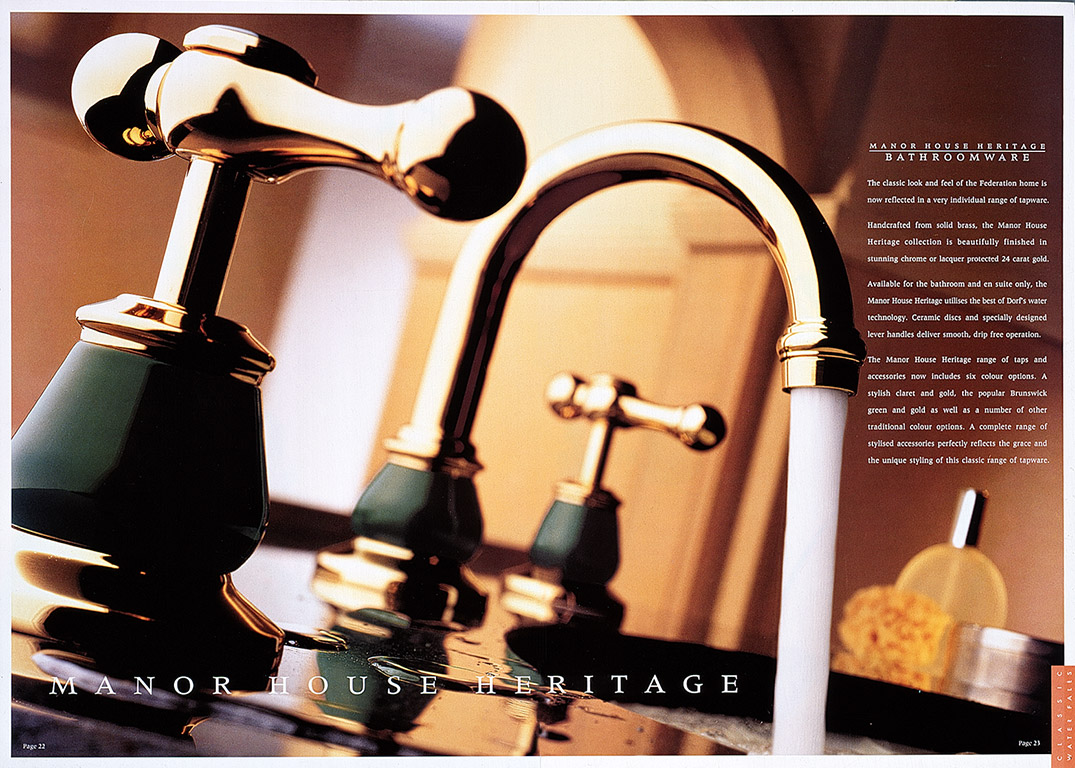
One of my earliest experiences of interior trends gone rotten was within my first year out of uni. I was working for a designer who did a lot of domestic work. An item that kept popping up was the heritage tap set that one of the major plumbing brands made. This set was available in heritage red, green and cream. And it was gross. But SO MANY people had it in their homes back then, which indicates that originally it hadn’t been gross!
Interior trends are a type of click bait for our emotions. I have no problem following trends but I am careful to analyse the situation before specifying. Here’s the break down of the assessment I use for each situation.


Retail
I design lots of retail outlets. They range from foodies, hair and beauty and fashion and so many different types in between. Stores in large shopping centres usually have a 5 year lease. It is expected that your store design will reflect the latest trends that are complimentary to selling your product or service. That’s great and customers love seeing new design direction and 5 years is a perfect time for a trend, because at the end of 5 years that retailer will be expected to do a new fitout featuring the upcoming looks.


This is the consideration that I use when I begin a residential job with a client, and we need to decide how much trend factor we allow for in the design. I use 3 main categories, and this is where emotion starts to factor in.


Residential- general housing
Home is where you spend most of your time besides work. Most people want to appear “with it” and trendy with their homes. That’s fine. But if you want to do trendy perhaps think of how and where to use it so that you’re not stuck with it 10 years after the trend has gone. Tiles, plumbing and joinery are expensive items to replace. They are the items I would err on the side of caution with. The industry rule of thumb is that kitchens have a 10-year life span, bathrooms about 15. But the reality is that due to the high costs most people are only redoing their kitchen every 20-30 years. You can still have beautiful and amazing as well as longevity. If the owners are thinking they’ll stay long term but also aware that down the track things may change, then I would discuss a more considered approach to following trends.


Residential- reno/build for sale
If you are doing up a house with the view to sell reasonably soon- go for it. Get on trend and enjoy. Think of all the home shows where the end game is to sell the house. The fitouts are all totally on trend. That’s where the emotional click bait comes in. Potential buyers walk in the door and are hit with the WOW factor. They usually aren’t thinking about how long the trends will last, just how great it all looks. Chances are they haven’t even fully identified all the trends, only some. The trends are all working as an overall amazing package.


Residential- you and your personality.
If you are about to do a house reno and you really love rose gold, black taps and leopard print wallpaper- do it. If that’s your personality and it just happens to be on trend, why not show it. This is tempered with the advice that if you plan to stay in your house long term and not sell within the foreseeable future, then have fun and reflect your personality. It’s your home and you have to be able to smile every time you walk in the door. This is my category and the way most designers handle their own houses. I have not designed my house for resale, but for my life- long term. I have features in my house that people who know me just totally understand why I’ve chosen them.


Clothing trends are easy. You can throw it out if you get sick of it. However if something is chem-set to your wall, it becomes a bit trickier and also expensive.


Food for thought from Albert Einstein……
What is right is not always popular and what is popular is not always right.


Wednesday, June 12, 2019

Those who Watch....


I’ve just come from a client meeting in a nearby Westfield centre and I've left pondering “who is watching who in the shopping centres?” 


A lot of people are not aware of the inner workings of the large shopping centres. To many people it’s the local retail hub, a place to meet with friends for recreational shopping, enjoy a meal, catch some entertainment or fulfill daily tasks of grocery shopping or perhaps medical appointments.


Personally I love the behind the scenes inner workings of the large centres. After hours they become a mini city of workers who are creating the fantasy for the next day of trading. That’s my “retail designer” version!


In a large scale centre part of the “behind the scenes” is the interaction that centre management have with their tenants- the retailers. There’s the daily give and take that happens with retailers pushing the envelope and moving display racks further out into the malls and being told by management to pull them in. Sometimes there are issues with retailers introducing new product lines which may breach their original lease agreement. Other established retailers don’t like it if their neighbour suddenly starts selling very similar products to theirs.


On a daily basis various people in Centre Management walk the floor and observe, however after today’s visit I was quite surprised by the slipping standards I saw.
I passed a café with the most disgusting dusty pendant light hanging over tables where people sit and eat. At another café I saw a Happy Easter sign up now 3 months after Easter. These are house keeping issues that should be getting noticed and actioned. I also saw kiosk stores with piles of unnecessary and non retail items in big stacks. It made the stores look messy and gave them a worn feeling. Usually Centre Management would be onto individual tenants quick as a flash, but that is obviously not happening. 

If I’m noticing this as I walk past at a brisk pace, the shoppers definitely are as they linger over their coffee and meals. Plenty of phrases come to mind- where does the buck stop? Whilst I think it’s a harsh analogy- does rot start at the top? In any type of collective group in society the actions of one affect the whole. In these retail times and the high rents in these big centres, everyone needs to play their A game all the time.


Monday, March 18, 2019

Renovating- the first decision.


As well as designing shops I have the privilege of designing homes for many wonderful clients. This is a whole other design process to retail. Most of my domestic work is renovation designs of existing houses. Over the years I have found that there are common questions everyone asks as we embark on their design process. The first question is "should I pull down and start from scratch or renovate?"


Renovating is expensive. It is often cheaper and faster to build from scratch. 


Sometimes you aren’t able to pull the house down or maybe the original house has characteristics that you like and don’t want to lose. 


You need to also check the condition of the house. Does it have good strong bones? If there are no building controls on the house, don’t take on a reno if you are going to end up replacing almost every wall due to rot or damage. 


Renos become expensive due to the unknown. Whilst builders can provide a provisional cost estimate a lot of them are hesitant to give a fixed price for a reno as they just don’t want to get financially caught if they should discover a major issue once they begin building. Time and money can disappear quickly while you are trying to match timbers and moulding profiles, remove hidden asbestos or sand back old lead based paint. It’s commonly known that renos always cost more than your initial budget. It’s worth getting a few opinions from builders about your house before you make the decision to renovate or pull down.


 Keeping in mind these factors if you are still leaning towards a reno, it often comes down to making a decision about how much the existing character is worth to you on both an emotional and monetary level. It may even be possible to do a new build and incorporate some of the features from the old house you’ve pulled down. For example old worn bricks can be cleaned up and used for new feature walls.


 Old floor boards can be re purposed on walls or other surfaces. 


Clever forethought can put character back into the house whilst allowing a more cost effective overall new build.


Friday, October 26, 2018

A Proper Introduction


This week my mum informed me that she was going to Harris Scarfe to look for some sheet sets. She asked if I wanted to come with her, however I declined. I didn’t need sheets and I couldn’t think of anything that I thought the store would offer and which I needed.  But more to the point I’ve never been inside a Harris Scarfe store in my life, despite this store being only 15mins away at my local Westfield mega centre.
It got me thinking about why I knew nothing about this store and had never ventured in. I guess I’ve just never been properly introduced.


A quick google and it turns out the brand is almost 170 yrs old. It was established in Adelaide and I guess that has created part of my problem. I’m up here in sunny Queensland and Harris Scarfe is a bit of a new comer to our state that’s why I don’t really know much about them, none of my family or friends have introduced me.


When you think of shops they could be compared to family. Some of them have been around since our birth- Coles, Woolworths, David Jones, Myer, Kmart, Country Road, Sportscraft etc. (depending upon your age of course) They are like the grandparents, aunties, uncles and cousins that we just grow up knowing who they are. They are constants in our life. You can’t even remember when you were introduced, just that they’ve always been there. Then there are our friends in life, perhaps you’ve been introduced via a 3rd person. Some introductions via a 3rd party come with an assurance that you’re really going to like so and so. Sometimes that’s the case and other introductions you just don’t gel.


Of those friends and relatives you work out their individual quirks and whether you get on with them. Some of them you always feel happy when you visit, others you visit occasionally and that’s enough for quite a while. There are the cool cousins and the glamorous aunties and the practical down to earth friends who are always comforting and no matter how long you spend with them, you can’t wait to see them again.


Think about a new store that you’ve ventured into. Did it come recommended via someone you know? Did they tell you about all the cool treasures they’ve found and they think you would like the products too? Or had you seen some really great advertising or social media and it just resonated with you to the point that you wanted to visit?


If you’ve had none of those experiences what do you do when a new neighbour moves in? Do you go and introduce yourself first and hope that they will be nice and reciprocate with warmth? When you meet someone new it’s hard not to make a comparison and think to yourself how much characteristics of them remind you of other people you know. I think we all make a little mental calculation of where that person fits into our social hierarchy. We do the same with shops. We know you can go to store A or B and their prices will be similar with subtle differences in their products or Store A and B will have very similar products with price point differences.


Relationships are double sided. So how does the new retail kid introduce themselves? They can’t just sit around waiting for outsiders to make the first move, they’ve also got to decide who they want to appeal to, be friends with and hang out with. That’s where the marketing gurus step in to become the match makers and introduce us to new friends that hopefully we will have lasting relationships with.